
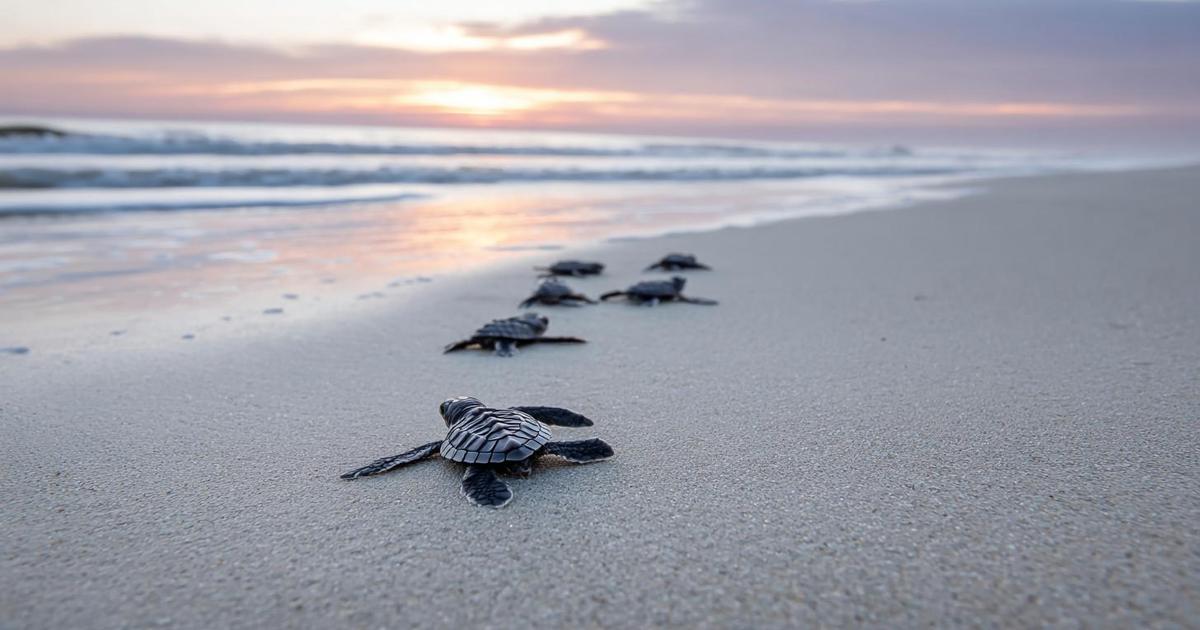
The Sea Turtles of the Gulf Coast
The Gulf of Mexico is home to five of the world's seven species of sea turtles, all of which are protected under the Endangered Species Act. While several species may be spotted in our waters, the most common nesting turtle on St. George Island is the loggerhead. For detailed information about all sea turtle species found in Florida, visit the Florida Fish and Wildlife Conservation Commission's species guide. Here's a closer look at the species you might encounter:
Loggerhead (Caretta caretta)
The loggerhead is the most common sea turtle in Florida, and its nesting activity is a hallmark of our summer season. Named for its massive, block-like head, the loggerhead is a powerful creature, with adults averaging around 275 pounds and sporting a shell length of about three feet. Their diet consists mainly of hard-shelled prey like clams and crabs, which they easily crush with their strong jaws. While not the fastest swimmers, they are known for their incredible stamina, undertaking long migrations between their feeding grounds and nesting beaches. Learn more about loggerheads from NOAA Fisheries.
Green Turtle (Chelonia mydas)
Named for their green body fat, green turtles are more streamlined than loggerheads and are primarily herbivores as adults, feeding on seagrasses and algae. They are a common sight in Florida’s coastal waters, and while their nesting numbers are lower than loggerheads, they have been steadily increasing in recent years. Green turtles are known for their biennial nesting cycle, meaning they typically nest every other year.
Leatherback (Dermochelys coriacea)
The leatherback is the largest of all sea turtles, a true giant of the ocean. Instead of a hard, bony shell, they are covered with a firm, leathery skin. These incredible animals are capable of diving to great depths and traveling thousands of miles. While they are less common nesters on the Gulf Coast, their presence is always a thrilling sight.
Kemp’s Ridley (Lepidochelys kempii)
The Kemp’s ridley is the world’s rarest and most endangered sea turtle. These small turtles are known for their unique, synchronized nesting events called “arribadas,” where hundreds of females come ashore to nest at the same time. While their primary nesting beach is in Mexico, a few Kemp’s ridley nests are occasionally found on the Florida Panhandle.
Hawksbill (Eretmochelys imbricata)
The hawksbill is a smaller, agile turtle with a beautifully patterned shell which has unfortunately made it a target for the illegal wildlife trade. They are more tropical in nature and are most commonly found in the coral reefs of the Florida Keys, but they occasionally venture into our waters.
Nesting and Hatching Season: A Detailed Timeline
Sea turtle nesting season on the Gulf Coast officially runs from May 1 to October 31, though some nesting activity can occur outside of this window. For comprehensive information about sea turtle nesting across Florida, visit the Florida Fish and Wildlife Conservation Commission's nesting page. Understanding the month-by-month progression of this natural phenomenon will help you plan your visit to maximize your chances of witnessing these incredible events.
April and Early May: The Season Begins
While the official nesting season begins on May 1st, some early nesting activity may be observed in late April. During this period, female sea turtles who’ve spent the winter months in warmer southern waters begin their migration northward. These pioneering females are often the first to emerge on our beaches. The water temperatures are still cool, but the lengthening daylight hours trigger the biological signals telling these ancient mariners it is time to return to the beaches of their birth. Beach patrols, coordinated by organizations like Clearwater Marine Aquarium, begin their nightly watches during this time.
May: Peak Nesting Begins
May marks the official beginning of sea turtle nesting season and is typically the start of peak nesting activity. During this month, the beaches of St. George Island and the broader Gulf Coast experience an increasing number of nesting females. The water has warmed sufficiently, and the conditions are ideal for egg incubation. According to the Florida Fish and Wildlife Conservation Commission, May represents the beginning of the most active nesting period, with loggerhead females beginning to establish their nests in earnest.
June and July: Peak Season in Full Swing
June and July represent the absolute peak of nesting season on the Gulf Coast. During these two months, the beaches are at their busiest, with nesting activity reaching its crescendo. The warm sand temperatures are ideal for egg incubation, and the long daylight hours provide ample opportunity for patrols to document and protect nests. According to recent data from the Florida Fish and Wildlife Conservation Commission's Index Nesting Beach Survey, June and July typically account for the majority of annual nesting activity.
August: Continued Nesting and Early Hatching
August continues to see significant nesting activity, though it begins to taper slightly from the June-July peak. More importantly, August marks the beginning of hatching season for eggs laid in May and early June. As these early nests reach their 60-day incubation milestone, hatchlings begin to emerge. The first hatchling "boils"—mass emergences where dozens or even hundreds of hatchlings erupt from a single nest—typically occur in August.
September: Hatching Season Accelerates
September sees hatching activity accelerate significantly as more nests reach their incubation milestone. Nests laid in June and early July are now producing their hatchlings. The beaches can be particularly active during this month, with multiple nests hatching on the same night. This is an excellent time to visit if you are hoping to witness hatchling emergences, though you must do so responsibly—maintaining your distance and ensuring no artificial lights are visible from the beach.
October: Season's End and Final Hatchlings
October marks the official end of nesting season on October 31st, though some nesting activity may continue into early November. However, hatching activity continues throughout October as the final nests laid in July and August reach their incubation milestone. By the end of October, most of the year's hatchlings have made their journey to the sea, though stragglers may still emerge into November.
The Incubation Period: What Happens Underground
Once a nest is laid and covered, the eggs begin their remarkable developmental journey. The incubation period for sea turtle eggs is approximately 60 days, though this can vary from 45 to 75 days depending on the temperature of the sand. Warmer sand accelerates development, while cooler sand slows it. This temperature sensitivity is critical to the survival of sea turtle populations, as it directly influences the sex ratio of hatchlings and the timing of their emergence.
Hatchling Emergence: The Race to the Sea
When hatchlings are ready to emerge, they use a special temporary tooth called a "caruncle" to break through the leathery egg shell. The entire clutch typically hatches within a 24-48 hour period. Once they break through the sand surface, the hatchlings instinctively head toward the ocean, guided by the natural light of the horizon and the sound of the waves. This journey, though it may only be 50-100 feet, is perilous. Predators, dehydration, and disorientation from artificial lights all pose significant threats.
A Banner Year for Sea Turtles
The 2024 nesting season was a testament to the ongoing conservation efforts to protect these ancient mariners. According to the Florida Fish and Wildlife Conservation Commission (FWC), loggerhead turtles had a particularly successful year, with nearly 58,000 nests documented on Florida’s 27 core index beaches. This brings loggerhead nest counts to levels not seen since the 1990s. Green turtles also had a strong showing, with over 10,000 nests recorded on the same index beaches.
How to Be a Responsible Observer
Witnessing a nesting sea turtle or a hatchling emergence is a truly magical experience, but it is crucial we do so in a way which does not interfere with their natural behaviors. The NOAA Fisheries marine life viewing guidelines provide comprehensive recommendations for responsible wildlife observation. Here are the essential guidelines for responsible sea turtle observation:
1. Keep Your Distance
The single most important rule is to give sea turtles their space. NOAA Fisheries recommends staying at least 50 yards (150 feet) away from any nesting or resting sea turtle. This is about half the length of a football field. Getting too close can cause a female to abandon her nesting attempt or disorient hatchlings.
2. Lights Out for Sea Turtles
Artificial lights are one of the biggest threats to sea turtles. Bright lights can disorient nesting females, causing them to return to the water without laying their eggs. For hatchlings, artificial lights are even more dangerous, as they can draw them away from the ocean and towards roads or other hazards. For more detailed information about sea turtle-safe lighting, visit the Clearwater Marine Aquarium's sea turtle safe lighting guide. During nesting season, it is critical to:
- Turn off all exterior lights on your beachfront property after dark.
- Close your blinds or curtains to prevent interior lights from spilling onto the beach.
- Avoid using flashlights, headlamps, or cell phone screens on the beach at night. If you must use a light, use a red-filtered flashlight, as sea turtles are less sensitive to red light.
- Never use flash photography when observing sea turtles.
3. Leave No Trace
Our beaches should be as pristine as possible to welcome our nesting sea turtles. Before you leave the beach each day, please:
- Remove all of your belongings, including chairs, umbrellas, and toys.
- Fill in any holes you may have dug and knock down sandcastles. These can become obstacles for nesting females and traps for hatchlings.
- Properly dispose of all trash. Discarded plastic bags and other debris can be mistaken for food by sea turtles and other marine life.
4. Identifying and Protecting Nests
Sea turtle nests are often marked by local conservation groups with stakes and colored tape. These markers are there to protect the nests from accidental disturbance. Please respect these marked areas and do not get too close. For information on how to identify sea turtle nests and tracks, visit the Sea Turtle Space Coast's nest identification guide. If you believe you have found an unmarked nest, do not attempt to touch or move it. Instead, contact the Florida Fish and Wildlife Conservation Commission Wildlife Alert Hotline at 1-888-404-FWCC.
A Shared Responsibility
At St. George Island Villas, we believe luxury and sustainability go hand in hand. We are proud to partner with our guests in the effort to protect our island’s natural treasures. By following these simple guidelines, you can play a vital role in ensuring the survival of these magnificent creatures.
Authoritative Resources and Further Reading
Throughout this guide, we have provided links to authoritative sources. Here is a comprehensive list of resources referenced:
Sea Turtle Species and Identification
1. Florida Fish and Wildlife Conservation Commission - Species of Sea Turtles Found in Florida
2. NOAA Fisheries - Loggerhead Turtle
3. Sea Turtle Space Coast - Nest Identification Guide
Nesting Season Data and Monitoring
4. Florida Fish and Wildlife Conservation Commission - Nesting Page
Responsible Observation and Conservation
8. NOAA Fisheries - Marine Life Viewing Guidelines and Distances
9. Clearwater Marine Aquarium - Sea Turtle Safe Lighting Guide
Recommended Media
Image: Loggerhead Sea Turtle Nesting
Image: Sea Turtle Tracks